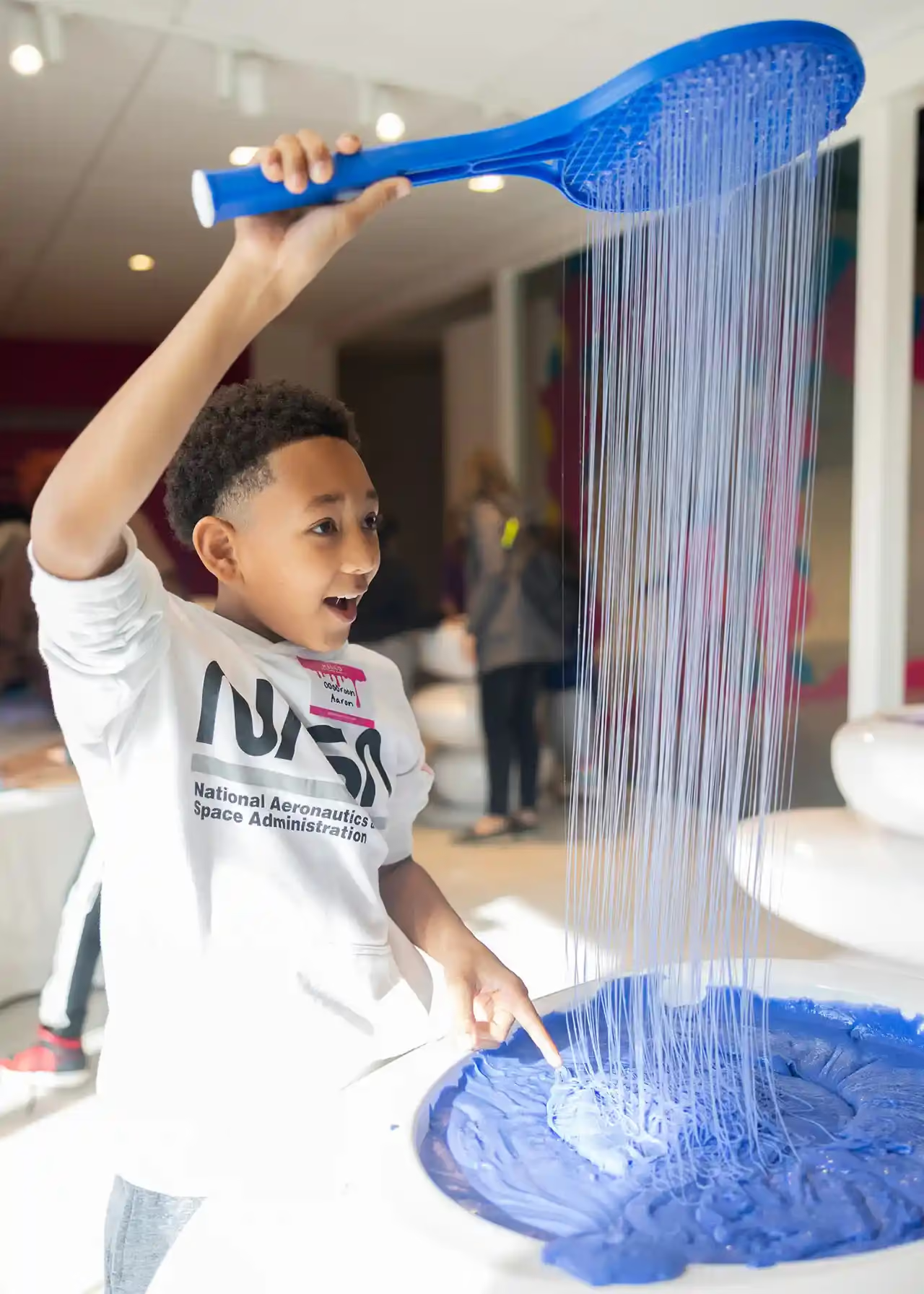
Why Playing With Slime Is Actually Good for You

Most adults walk into Sloomoo Institute not expecting to get into slime. Five minutes pass, and there they are… wrist-deep, completely lost in play, wondering when and how that happened.
It's not an accident. The pull towards slime is the nervous system doing exactly what it's supposed to do - regulate, simmer down, and find ease. There's real science behind why tactile play feels this good, and it applies to adults just as much as it does to kids.
Your Nervous System Notices Before You Do
The moment your hands make contact with slime, something shifts. That's not a metaphor, it's physiology.
Touching slime activates mechanoreceptors in the fingertips; those are specialized nerve endings that detect pressure, texture, and movement. They send signals directly to the nervous system, triggering a calming response that's measurable and well-documented. It's the same mechanism behind weighted blankets and stress balls. Slime just happens to be more satisfying than both!
Slime, a non-Newtonian texture (solid under pressure, liquid at rest), creates a sensory response the brain can't fully predict, which keeps it engaged and present. That unpredictability is part of why it's hard to put down.
Stress Leaves Through Your Hands
Repetitive tactile motion — squeezing, stretching, poking, folding — activates the parasympathetic nervous system, the branch responsible for rest and recovery. The American Psychological Association links physical fidgeting and tactile engagement to actual reductions in cortisol, the body's primary stress hormone.
For adults, slime functions as a reset. It interrupts a stress loop in a way that scrolling through a phone doesn't. For kids, it serves the same purpose — a physical way to decompress before dinner, homework, etc.
There's an auditory layer too. The calming, satisfying sounds slime makes — clicks, pops, crackles, sizzles — ignite ASMR (autonomous sensory meridian response), actual tingles that run up the spine and what feels like a massage for the brain in many people. This is the second channel of sensory input that soothes. Slime sounds aren't a byproduct of Sloomoo’s experience; they're built into it. (If you want to go deeper on that, the ASMR blog post covers exactly how it works.)
Fine Motor Skills are Getting a Workout
Slime looks simple. The hand mechanics behind it aren't.
Pinching, rolling, pulling, and pressing slime requires controlled, precise movements that engage all 26 muscles of the hand and the small muscle groups in the fingers. For kids, that kind of hand work builds the neural pathways used for writing, drawing, and using tools.
For adults, the benefit is maintenance and tension release. Most people who spend hours typing or scrolling are using a narrow range of hand motion. Slime introduces resistance and multiple movements that keeps dexterity sharp, particularly relevant for anyone over 40, or anyone who's noticed their grip strength quietly declining.
Keep the claims grounded: slime won't replace occupational or physical therapy. But it does real work.
It’s Mindfulness Without the Effort
You cannot be distracted and interact with slime at the same time. The texture, the temperature, the resistance, the scent, the visuals, the sounds — they require your full attention in a way that's closer to Csikszentmihalyi's concept of flow than to traditional meditation. Total absorption in a simple, satisfying task. Low stakes, high focus.
That matters for adults who find meditation inaccessible or performative. It matters even more for kids who can't sit still long enough for a guided breathing exercise. Slime meets both of them where they are — not by asking them to focus, but by making focus the only natural response.
The Social Side Nobody Talks About
At Sloomoo, slime is almost never a solo activity. People do it together, and that's not incidental.
Collaborative play lowers social anxiety by giving people something to do with their hands and their attention, removing the pressure of direct eye contact or forced conversation. For kids, it builds cooperative skills and conversational confidence without the structure of a game or the stakes of a performance. For adults, shared novelty and nostalgia accelerates bonding. The same reason team-building activities work is the same reason two strangers at a slime bar end up talking for twenty minutes.
The benefits of sensory play, in a group setting, extend well beyond the tactile.
What Happens at the Slime Bar
The DIY Slime Bar at Sloomoo puts all of this in one place: tactile exploration, sensory choice, creative decision-making, and social time, in a format that takes about as long as a coffee break.
Eight slime bases. Forty colors. Sixty scents. One hundred and twenty charms. The volume of choice is part of the engagement; it keeps the brain active.
Making something with your hands and taking it home also activates what behavioral scientists call the IKEA effect. Norton, Mochon, and Ariely (2012) found that people assign significantly more value to things they've built themselves, even when the effort is modest. Your slime isn't just a souvenir. It's something you made.
Find your nearest Sloomoo location at sloomoo.com/locations.
Your Questions About Slime and Sensory Play, Answered
Is playing with slime good for anxiety?
Tactile engagement with slime activates the parasympathetic nervous system, the same mechanism that makes stress balls and weighted blankets effective. The repetitive motion and ASMR-triggering sounds can reduce cortisol levels and create a measurable calming effect.
Is slime good for kids’ development?
Yes. Manipulating slime builds fine motor skills, supports sensory processing, and encourages focus. For kids who struggle with traditional sit-still activities, slime provides a structured sensory outlet.
What is sensory play and why does it matter?
Sensory play engages one or more of the senses in a purposeful way. It supports nervous system regulation in children and adults, and slime is one of the most effective tactile sensory tools because it combines texture, resistance, and sound simultaneously.
Can adults benefit from playing with slime?
Yes. Adults benefit from the same stress-relief and mindfulness mechanisms as kids. The tactile engagement provides a nervous system reset, and the focused, repetitive motion supports the same flow-state response that makes other hands-on hobbies effective for stress management.
Why does slime feel so satisfying?
Slime activates mechanoreceptors in the fingertips that send calming signals to the nervous system. The non-Newtonian texture — solid under pressure, liquid at rest — creates an unpredictable sensory response that keeps the brain engaged and present.
You know why it feels good. The next step is feeling it. Get your tickets or find a location near you.